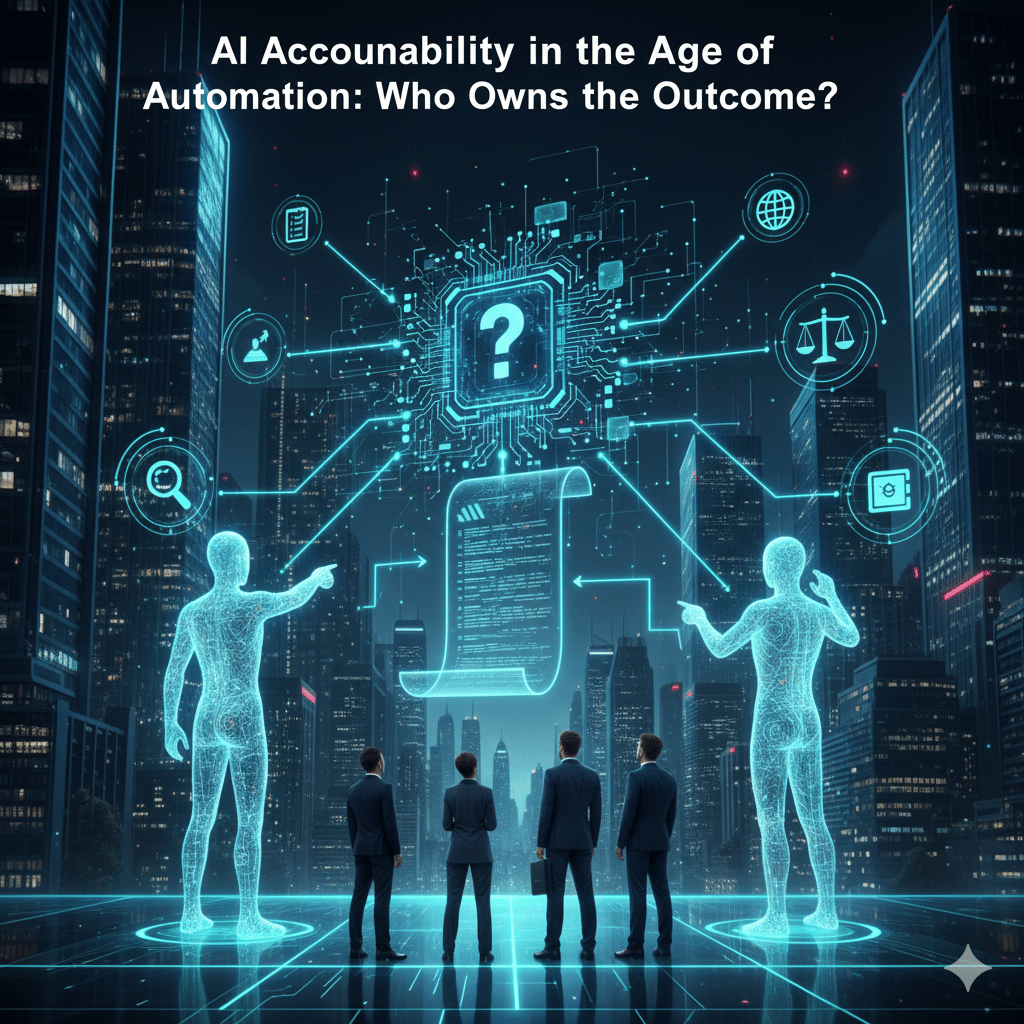
AI Accountability in the Age of Automation: Who Owns the Outcome?
1/5/20261 min read
Introduction to AI Accountability
The rapid evolution of artificial intelligence (AI) has brought forth profound capabilities, yet it has also sparked critical discussions surrounding accountability. As businesses increasingly incorporate automated decision-making systems, the question arises: who owns the outcomes produced by these systems? Understanding AI accountability in the age of automation is paramount for organizations seeking to navigate this complex landscape responsibly.
Dynamic Compliance Services and Their Role
Dynamic compliance services play a significant role in ensuring that organizations adhere to regulatory standards. As automation reshapes industries, these services help organizations maintain compliance with laws governing AI practices. They guide businesses in documenting their processes, ensuring transparency in decision-making, and establishing ownership of the outcomes generated by AI systems.
Establishing Ownership and Responsibility
In considering AI accountability, it is essential to define who is responsible when an automated system produces a harmful or unexpected outcome. Is it the developer, the business employing the AI, or perhaps the AI itself? The emergence of dynamic compliance services provides a framework for clarifying these responsibilities. As organizations leverage compliance services, they not only protect themselves legally but also foster trust with their stakeholders.
As AI technology continues to evolve, it becomes increasingly complex to determine ownership of outcomes. This is particularly evident in sectors such as finance, healthcare, and transportation, where the stakes are considerably high. Companies engaged in dynamic compliance practices can mitigate risks by ensuring that their AI systems are designed with accountability in mind, promoting outcomes that are ethical and justifiable.
Conclusion
In summary, the age of automation challenges traditional notions of accountability. Organizations must recognize the importance of dynamic compliance services in navigating these challenges, as these frameworks can provide clarity regarding ownership of AI-generated outcomes. As a result, businesses not only enhance their risk management strategies but also contribute to a more responsible AI landscape.
Connect:
(571) 306-0036
© 2026. All rights reserved.


